Music · Welsh Roots
The story behind Milford: a Welsh harbour, told in music
Milford Haven doesn't look like most Welsh towns you'd picture. There's no medieval castle at its centre, no winding lanes going back a thousand years. It's a working harbour town, built with a purpose, and its story is a little unusual — which is probably why it ended up as an entire album. And for everything packed into its history, it's small: around 14,800 people, by the last census.
Here's the short version, easy to read in a few minutes, of the place that shaped a big part of who I am.
A harbour long before there was a town
The waterway itself — Milford Haven, or Aberdaugleddau in Welsh, meaning "mouth of the two rivers Cleddau" — is one of the deepest natural harbours in the world. People had been using it long before anyone built a town on its shore. It sheltered Viking longships in the 9th century. In 1485, Henry Tudor landed here with his uncle, marching inland to Bosworth Field to end the Wars of the Roses and begin the Tudor dynasty. The harbour was doing important work centuries before it had a proper name on a map.
An unusual start: whalers from Nantucket
The town itself is surprisingly young — founded only in 1790, by Sir William Hamilton. What's stranger still is who he brought to build it: Quaker whaling families from Nantucket, in America, invited over to establish a whaling fleet on the Welsh coast. It's an odd little historical footnote that most visitors never hear — a corner of Wales with a genuine Nantucket connection.
Here's a nice twist, though: this part of Pembrokeshire had actually stopped feeling very Welsh long before the whalers arrived. It's known as "Little England beyond Wales" — a name first recorded back in the 1500s, for a strip of south Pembrokeshire that's spoken English rather than Welsh since Norman and Flemish settlers were planted there in the early 1100s. So by the time the Nantucket Quakers turned up in 1790, they weren't so much anglicising a Welsh town as settling into one that had already been speaking English for nearly 700 years.
From whaling to fishing to fuel
Whaling didn't last — by the 1800s the industry had faded, and the harbour was handed to the Royal Navy as a dockyard. Traders eventually took the site over, and Milford Docks became one of Britain's major fishing ports through the 20th century. The docks themselves have since had their own transformation: in 1991, they reopened as Milford Marina, launched with the Cutty Sark Tall Ships Race, and today the old dock is Milford Waterfront — cafés, restaurants, a hotel, boats moored where trawlers once landed their catch. It's the wider Haven, further along the water, that's known these days for oil and gas, and for the huge Irish Ferries ships that run daily from Pembroke Dock to Rosslare. But the fishing heritage is still everywhere close to the marina, especially where the old whale-oil storage building from the 1700s now houses the town's maritime museum.
The fisherman who's still watching the water
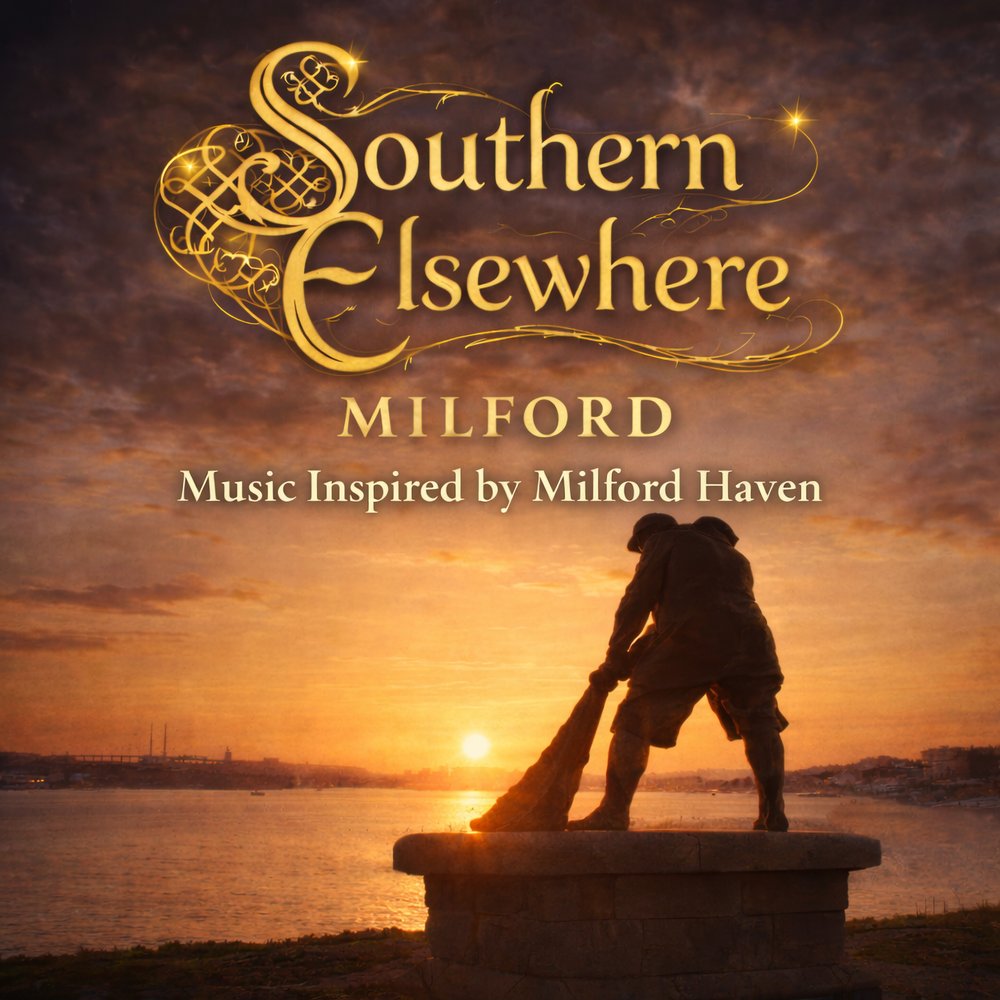
Up on the Rath, overlooking the harbour, there's a statue — a tribute to the fishermen who worked this water for generations, many of whom never came home from it. It was built by a Milford neighbour of mine. I made "Tribute to the Fisherman," a track on the Milford album, for that statue specifically — for everyone it was made to remember, and everyone still watching the water from somewhere else, the way I do now.
The full album, Milford, is eight tracks built entirely around this place — the tugs, the tides, the working lives of a town shaped by its harbour.
Listen to Milford →